Guided machine coating
Guide to painting compressor and generator housings
Compressor and generator housings need a clean, keyed and compatible coating build before they return to industrial use. Outer covers often collect oil mist, dust and handling marks, so preparation must remove contamination before the semi gloss finish is applied. The specified Mipa products provide cleaning, surface preparation, epoxy primer, semi gloss 2K polyurethane topcoat and small repair options.
What do you need to paint compressor and generator housings?
Cleaning and degreasing
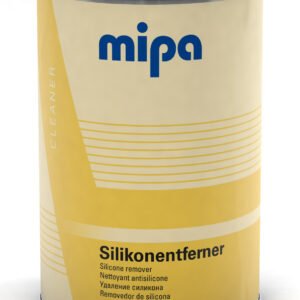
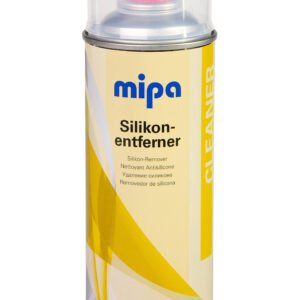
Mipa silicone remover in liquid or spray format removes wax, grease and silicone before sanding, primer or topcoat work. Clean panels make the next layer bond to the surface instead of to contamination.
Surface keying
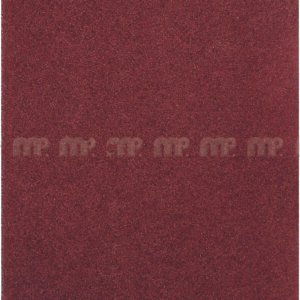
MP Non-woven Sanding Pad Very Fine keys stable old coating and smooth metal areas without creating deep sanding marks. It is useful on covers, bends, edges and recessed details.
Epoxy corrosion primer
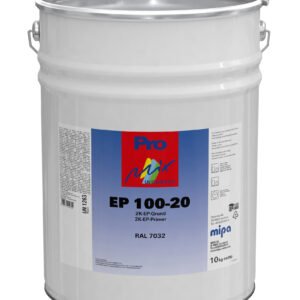
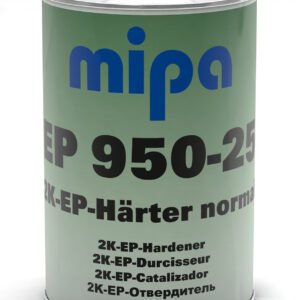
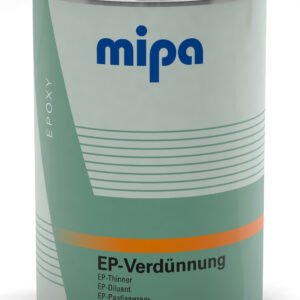
Mipa EP 100-20 with Mipa EP 950-25 hardener and Mipa EP Thinner creates the primer foundation for steel, aluminium or zinc coated housing panels used on compressor and generator covers. It helps the topcoat sit on a controlled 2K primer layer rather than on questionable bare or aged metal.
Semi gloss machine topcoat
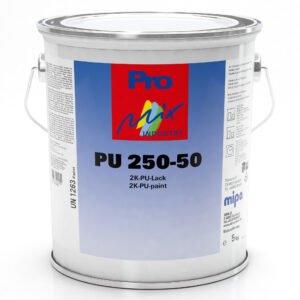
Mipa PU 250-50 is a 2K polyurethane acrylic semi gloss topcoat for high quality coatings on facades, machines and constructions. It is especially practical when brush or roller application is useful alongside spray work.
Topcoat hardener and thinner
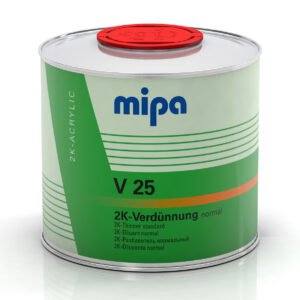
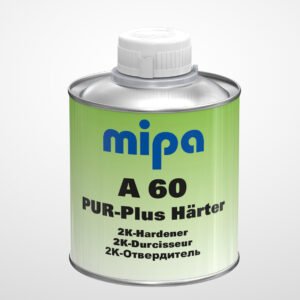
Mipa PUR Plus Hardener A60 and Mipa 2K Thinner Normal V 25 complete the PU 250-50 stage. The hardener controls curing and the thinner helps the material flow through the chosen application method.
Small aerosol repairs
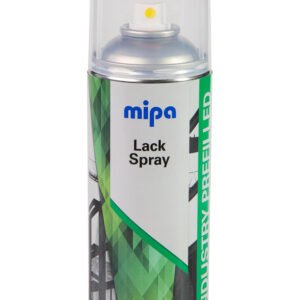
Mipa 2K-PU-Industry-Prefilled Spray can be filled with compatible PU 250 or PU 265 material for small local colour repairs in a 400 ml activated aerosol format. It is useful for edges, covers and isolated touch ups where a spray gun would be disproportionate.
How to paint compressor and generator housings
- 1
Clean before judging the surface
Remove dust, oil, fingerprints and workshop contamination first, then inspect the housing for bare metal, loose coating, scratches and corrosion.
- 2
Degrease and abrade
Use Mipa silicone remover before abrasive work, key stable areas with the non-woven pad, then clean again so sanding dust and grease are not trapped under primer.
- 3
Prime bare or exposed areas
Apply Mipa EP 100-20 with its EP hardener and thinner where a controlled epoxy primer foundation is needed for adhesion and corrosion protection.
- 4
Apply the semi gloss finish
Coat with Mipa PU 250-50 and the specified hardener and thinner, keeping film build even around edges, vents, brackets and removable covers.
- 5
Leave the coating to cure
Allow the 2K coating to cure before reassembly, transport or handling. Fresh coating can mark easily around bolt heads and panel edges when parts are handled too soon.
Which products should you choose for compressor and generator housings?
For external cover panels
Use PU 250-50 for outer housings, side covers and service panels that need a durable semi gloss finish.
For bare metal scratches
Prime scratches and exposed metal with EP 100-20 before the topcoat so damaged areas do not become weak points.
For local cover repairs
Use the prefilled 2K-PU aerosol option for isolated repairs on covers or corners after careful degreasing and keying.
Technical details
- Mipa PU 250-50 is a 2K polyurethane acrylic semi gloss topcoat for machines, facades and constructions.
- PU 250-50 is suitable for brush and roller application and uses Mipa PUR Plus Hardener A60 at 10:1 by weight and 8:1 by volume.
- Mipa EP 100-20 is specified for steel, zinc coated steel, aluminium, fibreglass and mineral substrates.
- Mipa 2K-PU-Industry-Prefilled Spray is compatible with PU 250-XX and PU 265-XX material for small activated aerosol repairs.
- These coating instructions are for external housings and covers, not exhaust manifolds, mufflers, hot engine blocks or parts that need a high heat coating.
Practical suggestion
Mask labels, vents and identification plates carefully. Service information and airflow openings should remain readable and clear after painting.