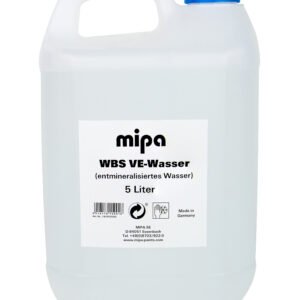
Mipa WBS deionised water is the dedicated thinner for the WBS finish, used only when the coating needs controlled adjustment for brushing, rolling or spraying.

Guided shopping manual
MDF furniture needs extra attention at edges, cut faces and absorbent areas. Once the board is sealed, smooth and dust free, the waterborne satin matt WPA finish gives a clean furniture-grade colour surface.
Mipa WBS deionised water is the dedicated thinner for the WBS finish, used only when the coating needs controlled adjustment for brushing, rolling or spraying.
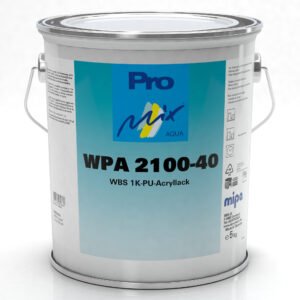
Mipa WPA 2100-40 gives a waterborne 1K PU acrylic satin matt finish for common wood surfaces, with a calm low-sheen look for furniture and visible interior pieces.
Pay special attention to cut edges, screw holes and routed details, because MDF absorbs more strongly at exposed edges.
Sand the sealed and prepared board evenly, then remove dust from corners, grooves and flat panels.
Use Mipa WBS deionised water only when the WPA finish needs adjustment for the chosen application method.
Apply Mipa WPA 2100-40 in thin even coats, allowing each layer to dry before light correction or the next coat.
Let the coated MDF harden before fitting hardware, sliding objects across it or putting shelves into service.
Mipa WPA 2100-40 is the finish for prepared MDF furniture when a smooth low-sheen colour result is wanted.
MDF edges need proper preparation before the finish coat, otherwise they can look rougher and duller than the face of the board.
Mipa WBS deionised water is the compatible adjustment choice when the waterborne finish needs viscosity control.
Coat a small prepared test area on MDF edges first. If the edge still looks open or fuzzy after drying, prepare and sand the edge again before finishing the whole piece.
© 2026 All Rights Reserved.
Start with the item. The job page shows what to use and in which order.