Transparent plastic coating
Guide to coating clear display covers and transparent plastic parts
Clear display covers and transparent plastic parts need a transparent, clean coating method rather than a heavy opaque paint build. The work depends on gentle cleaning, the correct adhesion layer and a clear finish that keeps the part usable.
What do you need to coat clear display covers and transparent plastic parts?
Water-based final cleaning
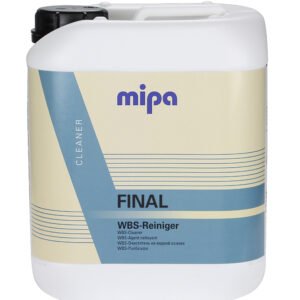
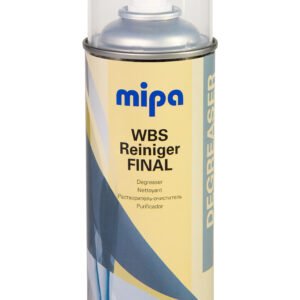
Mipa WBS Cleaner FINAL in spray or liquid format removes contamination from sensitive clear plastics before sanding or coating.
Microfine surface refinement
MP Finish Pad Soft Microfine P 1500 supports delicate hand refinement on transparent plastic edges and curved covers.
Polycarbonate primer
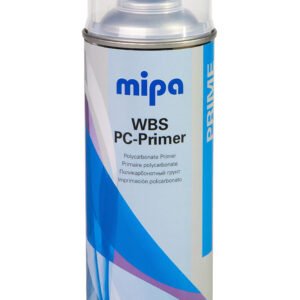
Mipa WBS PC Primer Spray creates a colourless adhesion layer on polycarbonate and similar solvent-sensitive clear plastics.
Universal adhesion promoter
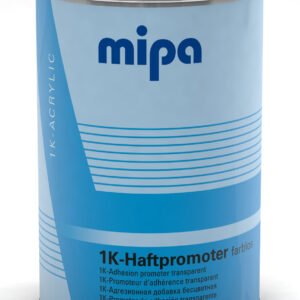
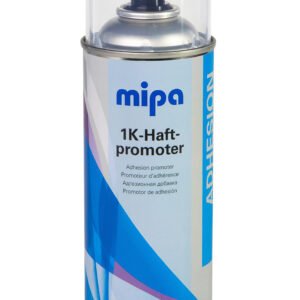
Mipa 1K Adhesion Promoter in spray or liquid format supports difficult hard plastics and smooth substrates that need a thin bonding layer.
Activated clearcoat spray
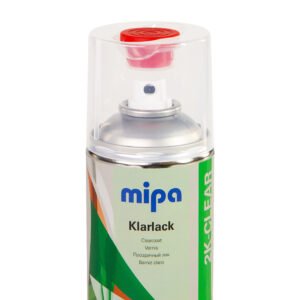
Mipa 2K Clearcoat Spray high gloss gives a compact clear 2K finish for smaller display covers and transparent parts.
Scratch-resistant clearcoat system
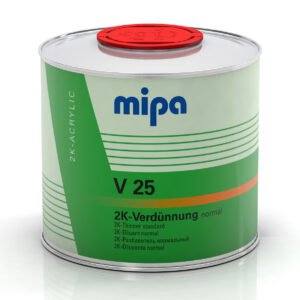
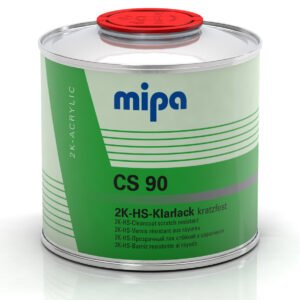
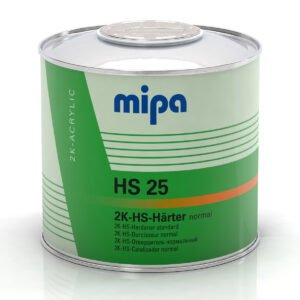
Mipa 2K-HS Clearcoat CS 90 with Mipa 2K-HS Hardener HS 25 normal and Mipa 2K Thinner Normal V 25 gives a controlled clear finish for larger parts.
How to coat clear display covers and transparent plastic parts
- 1
Identify the plastic
Confirm whether the part is polycarbonate or another hard clear plastic so the right adhesion method can be chosen.
- 2
Clean and refine
Clean the surface, refine marks gently with the microfine pad and remove all residue before priming.
- 3
Apply the adhesion layer
Use WBS PC Primer on polycarbonate or the 1K adhesion promoter on suitable difficult substrates according to the technical information.
- 4
Apply clearcoat
Use light, even clearcoat passes to avoid runs, trapped haze or heavy edge build on transparent plastic.
- 5
Cure before fitting
Let the coating cure before handling, fastening or flexing the clear part.
Which transparent plastic coating method should you choose?
For polycarbonate covers
Choose the water-based PC primer method to avoid aggressive solvent attack on sensitive clear plastic.
For difficult hard plastics
Choose the 1K adhesion promoter method when a thin colourless bonding layer is the correct match for the substrate.
For highest visual clarity
Keep sanding, cleaning and clearcoat film build controlled, because haze and dust are highly visible on transparent parts.
Technical details
- Adhesion promoters are thin bonding layers; heavy application can reduce clarity and cause edge build.
- WBS PC Primer is the safer Mipa method for polycarbonate compared with solvent-heavy preparation on sensitive clear plastic.
- Transparent parts reveal dust, fingerprints and sanding scratches more strongly than opaque plastic.
- Clearcoat should be applied only after the adhesion layer has flashed as required by the relevant technical information.
Practical suggestion
Test coating behavior on an unseen edge or spare piece before working on a display cover. Clear plastics vary, and the wrong adhesion method can mark the surface permanently.